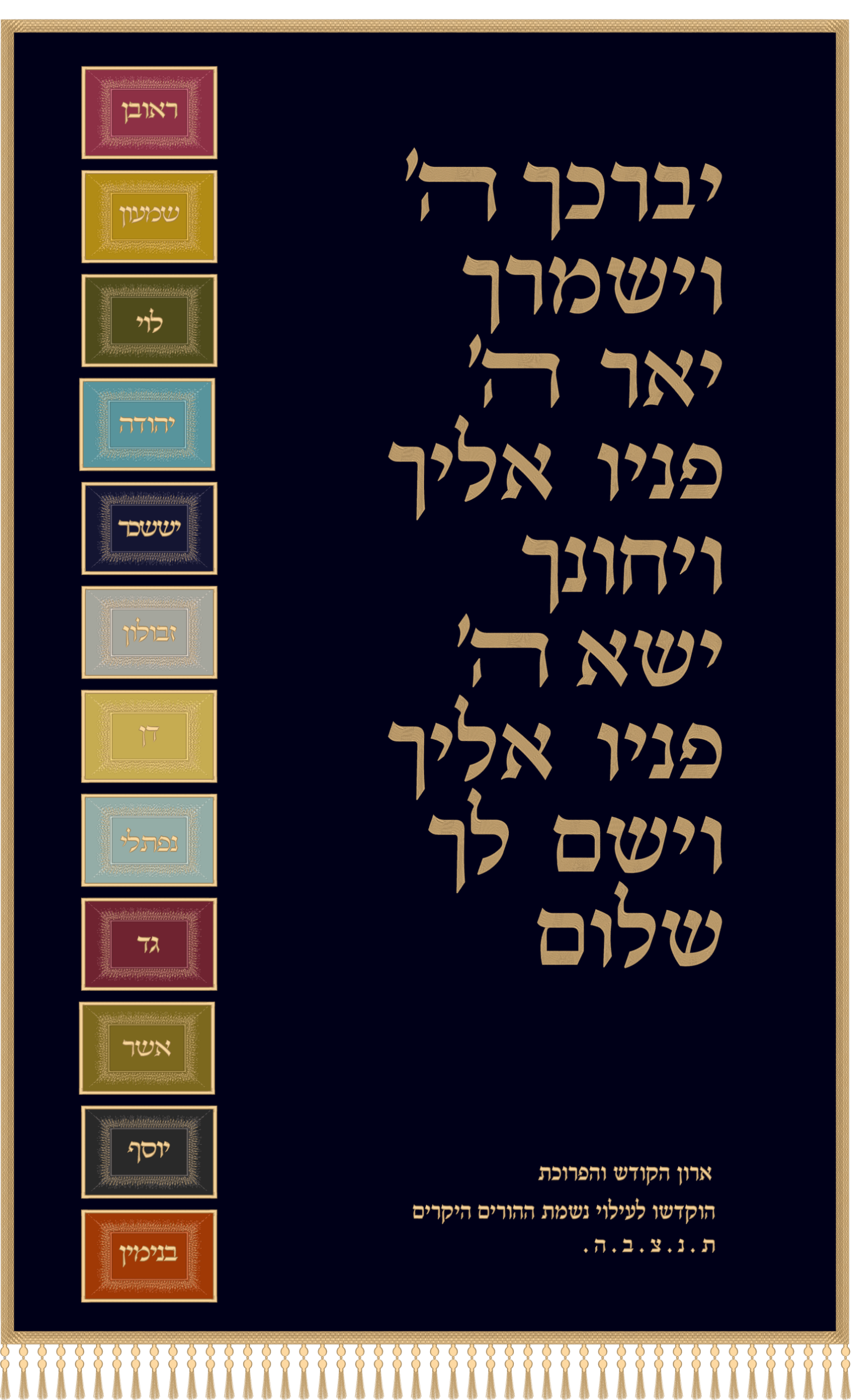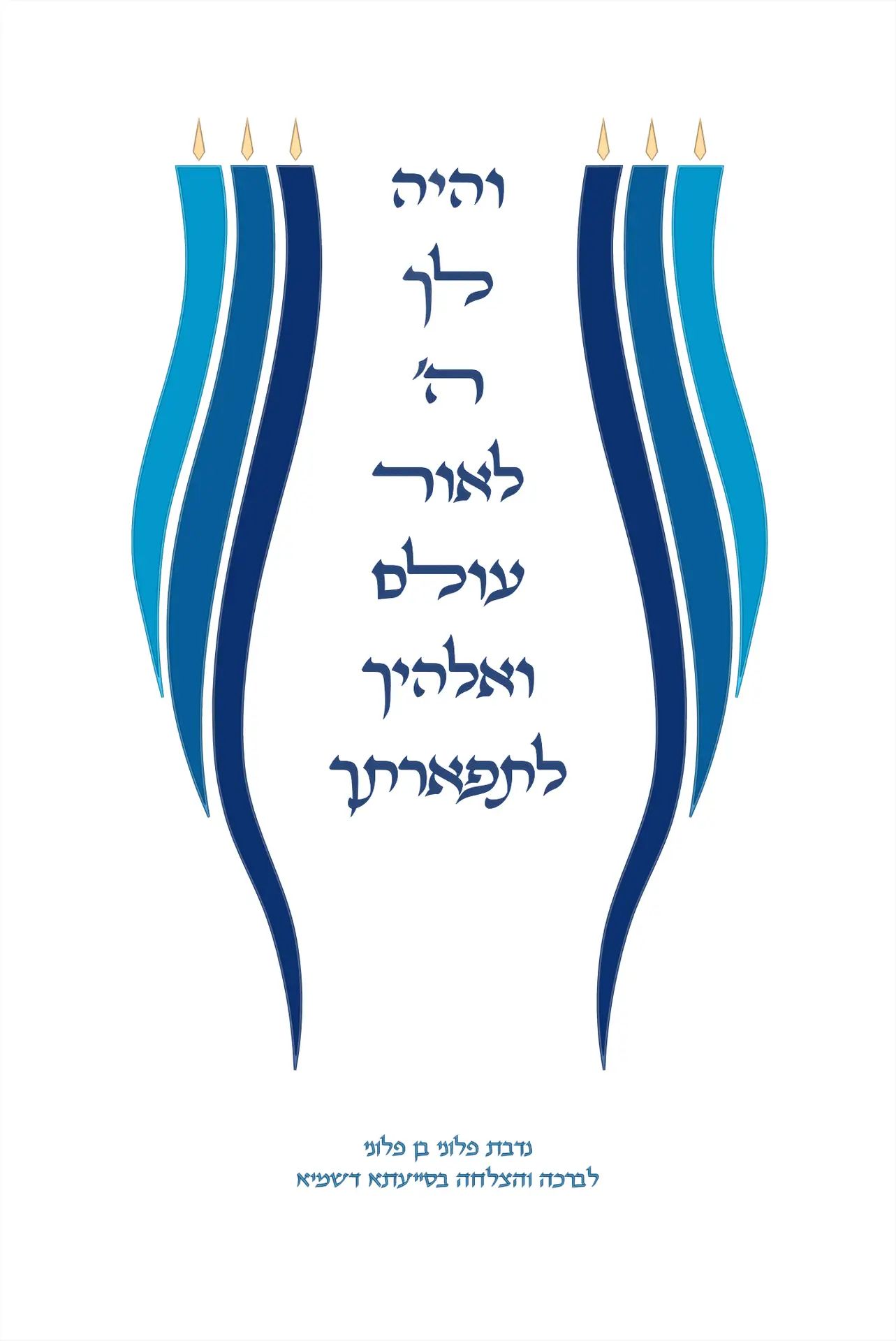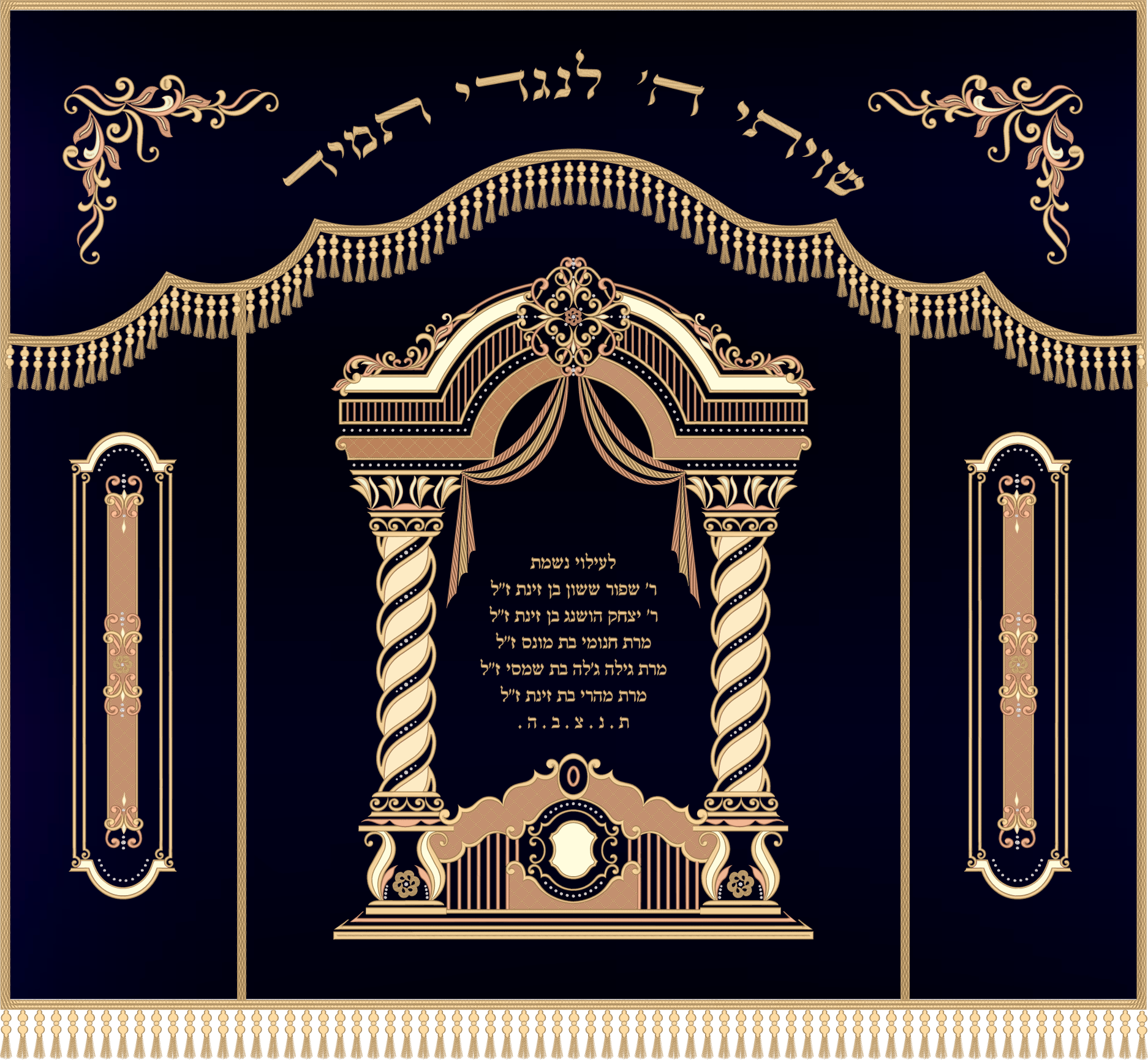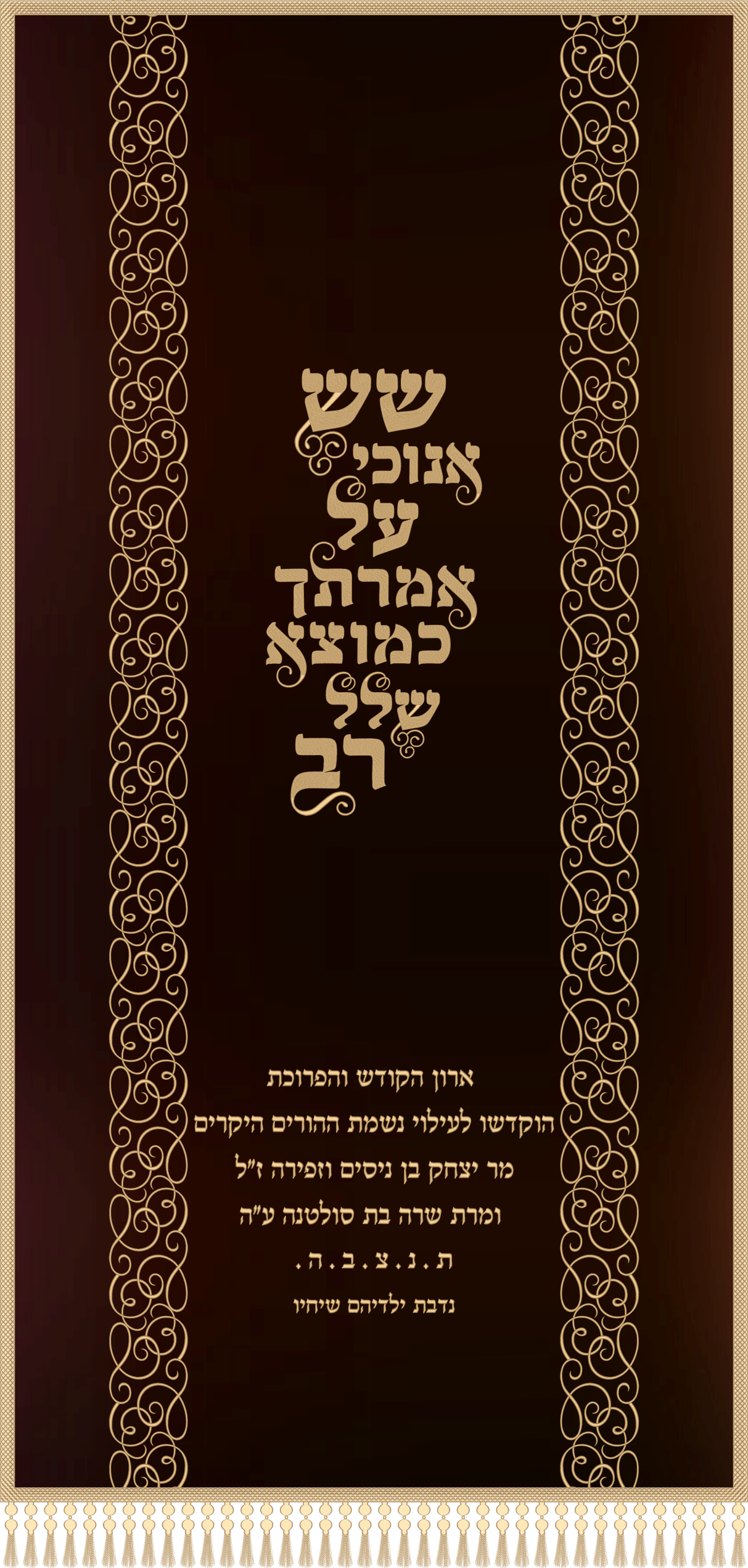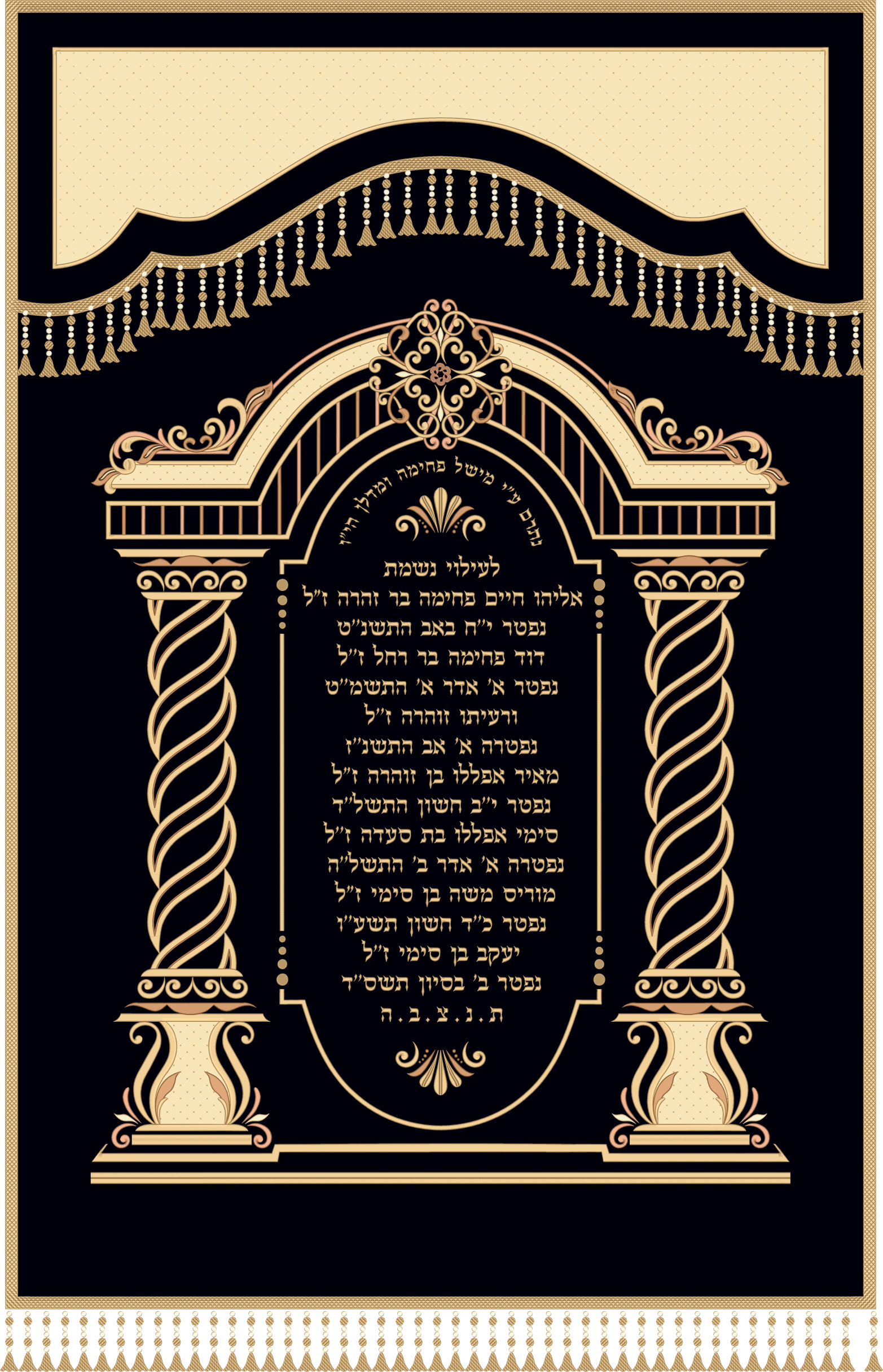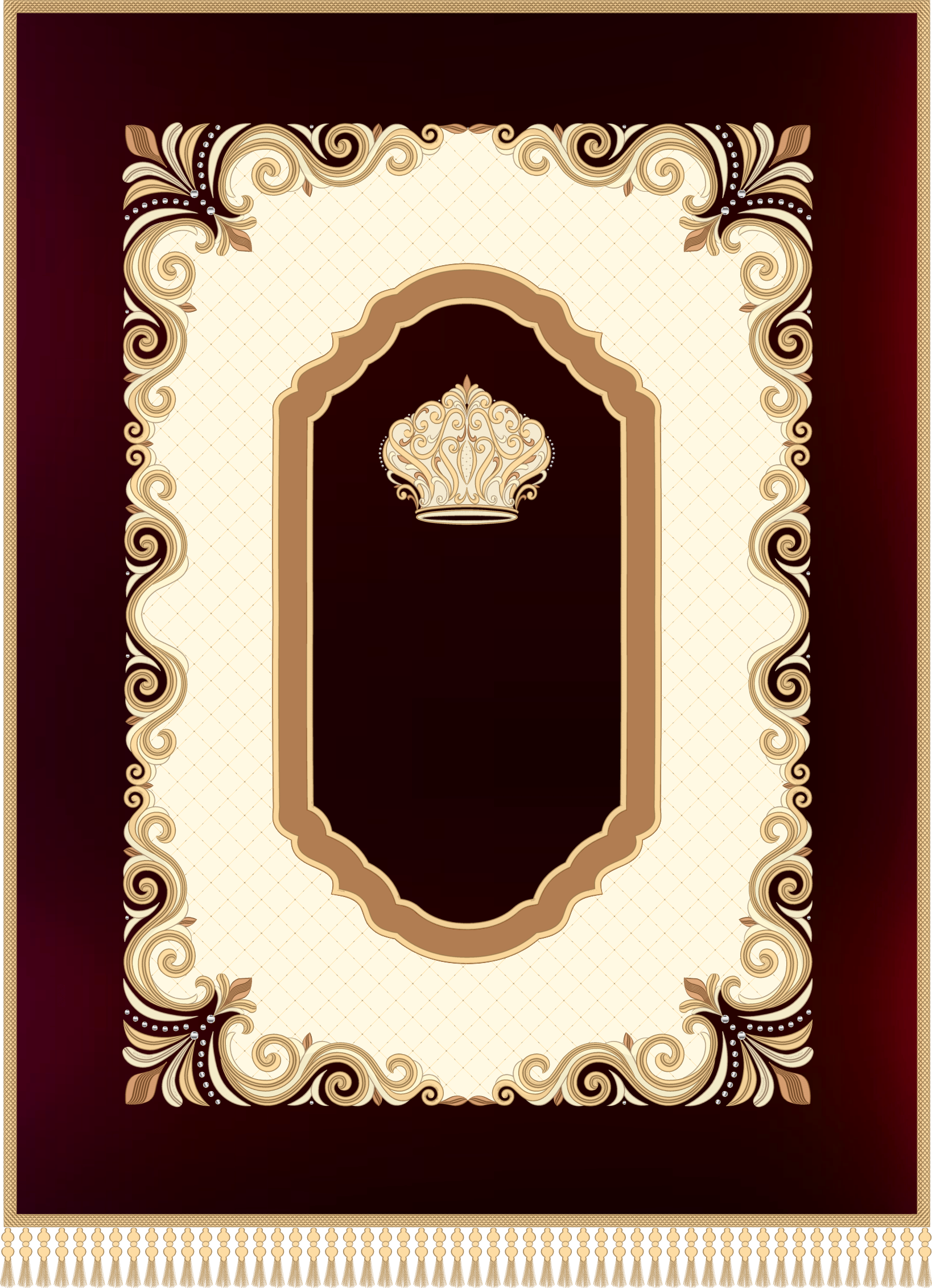

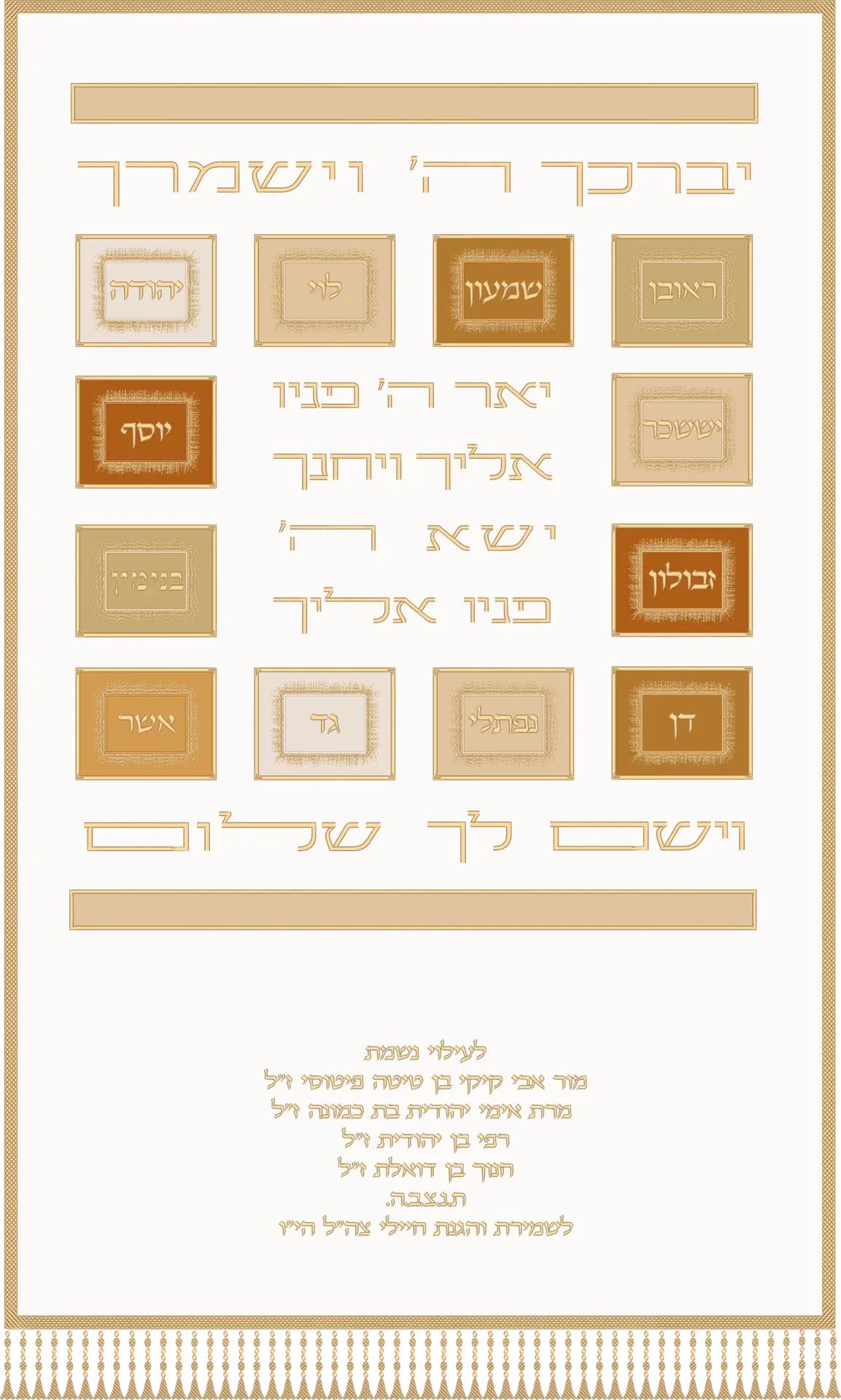
A פרוכת להיכל (parochet le'heichal) is the hand-embroidered curtain hung before the Heichal — the cabinet that holds the Torah scrolls, especially in Sephardic and Mizrahi synagogues — marking the space as sacred much as the curtain once did before the Holy of Holies in the ancient Temple. It serves a practical purpose, shielding the scrolls from dust and light, and a spiritual one, dressing the ark in beauty befitting the words it holds. Choosing the right curtain for a synagogue's Heichal is a meaningful decision shaped by custom, artistry, and community taste.
In brief
- This hand-embroidered curtain covers the Heichal, the ark that holds the Torah scrolls, most often in Sephardic and Mizrahi synagogues.
- "Heichal" is the word many communities use for what Ashkenazi congregations commonly call the Aron Kodesh.
- The custom recalls the curtain that hung before the Holy of Holies in the ancient Temple in Jerusalem, giving it deep historical roots.
- Choosing a curtain for the Heichal usually involves selecting a fabric, an embroidery style, and motifs that reflect the congregation's heritage.
What Is a פרוכת להיכל?
A curtain of this kind is, at its simplest, sized and designed to hang across the opening of the Heichal, shielding the Torah scrolls from view when the ark is closed and revealing them with ceremony when it is opened during prayer. Unlike a plain fabric cover, it is typically hand-embroidered with meaningful imagery — a crown, a pair of lions, the Tablets of the Covenant, or verses from Psalms — so that even before the doors open, the curtain communicates the holiness of what lies within. Over time it becomes part of the visual identity of the synagogue, recognized by members and guests alike.
The Heichal in Sephardic and Mizrahi Custom
The Heichal is the term that Sephardic, Mizrahi, and many Middle Eastern Jewish communities traditionally use for the cabinet that houses the Torah scrolls, a usage rooted in the Hebrew word for "palace" or "sanctuary." Ashkenazi communities more commonly say Aron Kodesh, but the two terms describe the same sacred function. Learning about this shared history of the Torah ark across Jewish communities helps explain why a פרוכת להיכל can look different from one congregation to another, even as its purpose stays the same.
The Symbolism Behind the Curtain
This curtain carries symbolism reaching back to the Mishkan and the Temple in Jerusalem, where a woven parochet separated the Holy of Holies from the rest of the sanctuary. Hanging a curtain before the ark today continues that memory, treating the place where the Torah rests with the same reverence shown to the ancient sanctuary. Many congregations choose designs connected to this history, such as a Temple-inspired parochet, echoing the grandeur of Jerusalem even while praying far from it.
Choosing Fabric and Design for a פרוכת להיכל
Fabric choice shapes both the appearance and the lifespan of a curtain made for the Heichal, and most hand-embroidered pieces are made from silk, velvet, or a thoughtful combination of fabrics chosen for their look and durability.
| Fabric | Look & Feel | Best Suited For |
|---|---|---|
| Silk | Light, lustrous, delicate sheen | Sanctuaries seeking a softer, radiant appearance |
| Velvet | Rich, heavy, deep color | Traditional settings wanting a formal, weighty presence |
| Combined fabrics | Layered textures and contrast | Congregations wanting a distinctive, custom look |
Common Motifs Found in This Curtain
Embroidered imagery gives every פרוכת להיכל its character, and certain motifs appear again and again across Jewish tradition.
- Crowns, symbolizing the "crown of Torah" placed above the ark.
- Lions of Judah, standing guard on either side of the opening.
- The Tablets of the Covenant, recalling the Ten Commandments.
- Gates or arches, such as a Moroccan-style gate design, evoking the gates of Jerusalem.
Browsing our gallery of parochot is a good way to see how these motifs come together in a finished curtain for the Heichal.
Hanging and Caring for the Curtain
A curtain made for the Heichal is usually hung on rings or a fitted rod just inside or in front of the ark's doorway, sized so it moves freely without dragging or bunching when the ark is opened during services. Because it is handmade and often trimmed with metallic thread, it benefits from gentle handling, occasional light dusting, and professional cleaning rather than home washing, so its embroidery stays crisp for years of use. Many congregations also keep a second curtain in reserve for holidays, so the everyday piece is not exposed to constant handling.
Frequently Asked Questions
Is a פרוכת להיכל the same as a parochet for an Aron Kodesh?
Yes — both terms describe the curtain hung over the ark holding the Torah scrolls; "Heichal" and "Aron Kodesh" are simply the words different communities use for the ark itself.
Can a synagogue have more than one curtain for its ark?
Many congregations keep several curtains and rotate them for Shabbat, holidays, and the Days of Awe, so the Heichal can be dressed differently throughout the year.
What determines the size of the curtain?
The curtain is measured to match the exact width and height of the Heichal's opening, so accurate measurement is the starting point before any fabric or design is chosen.
Whether a congregation calls it a Heichal or an Aron Kodesh, the curtain hung before it remains one of the most visible expressions of a synagogue's character and its care for the Torah scrolls within. At Hichala (היכלא), each פרוכת להיכל is hand-embroidered to reflect the traditions and taste of the community it serves, turning a functional cover into a lasting piece of sacred art.