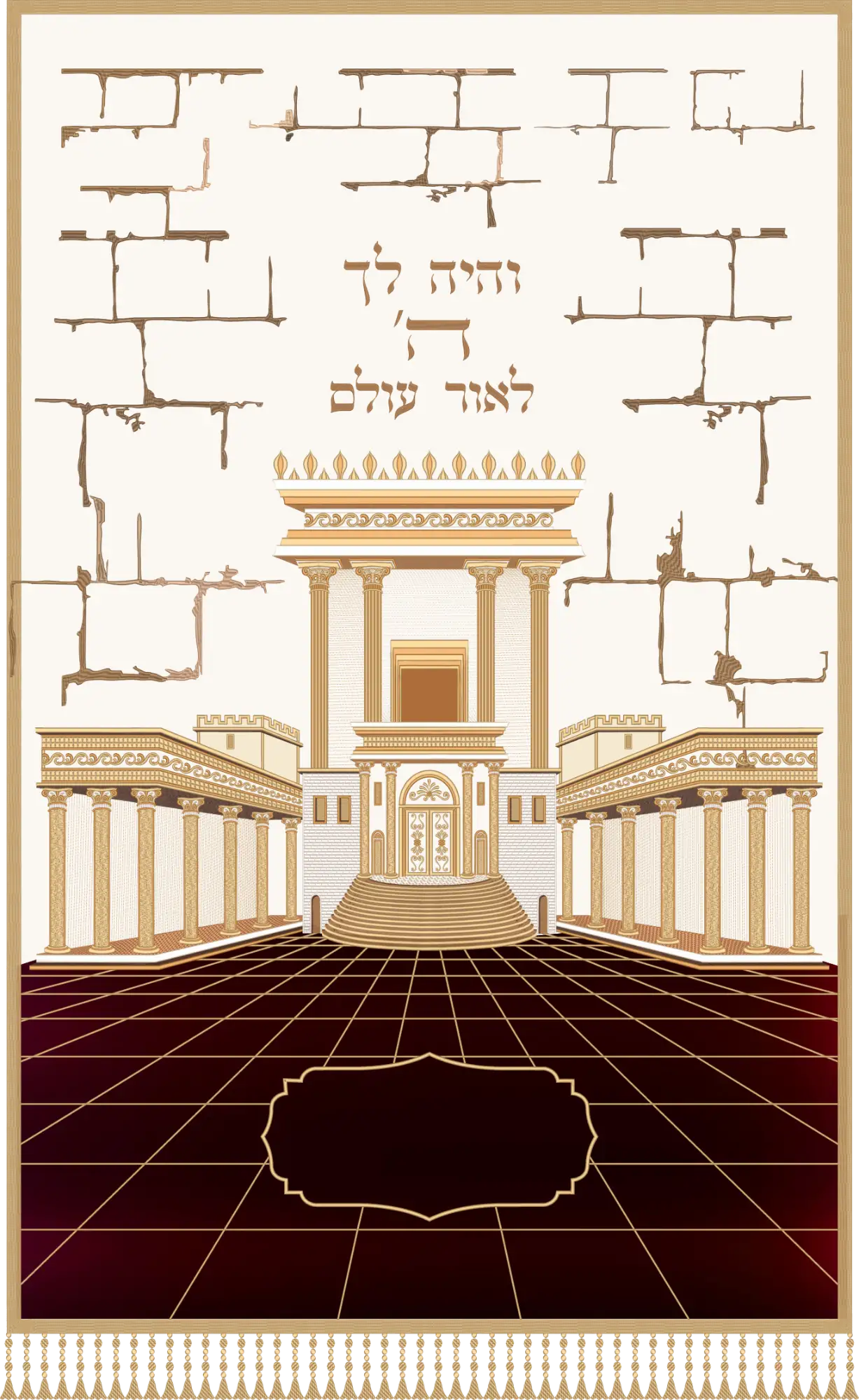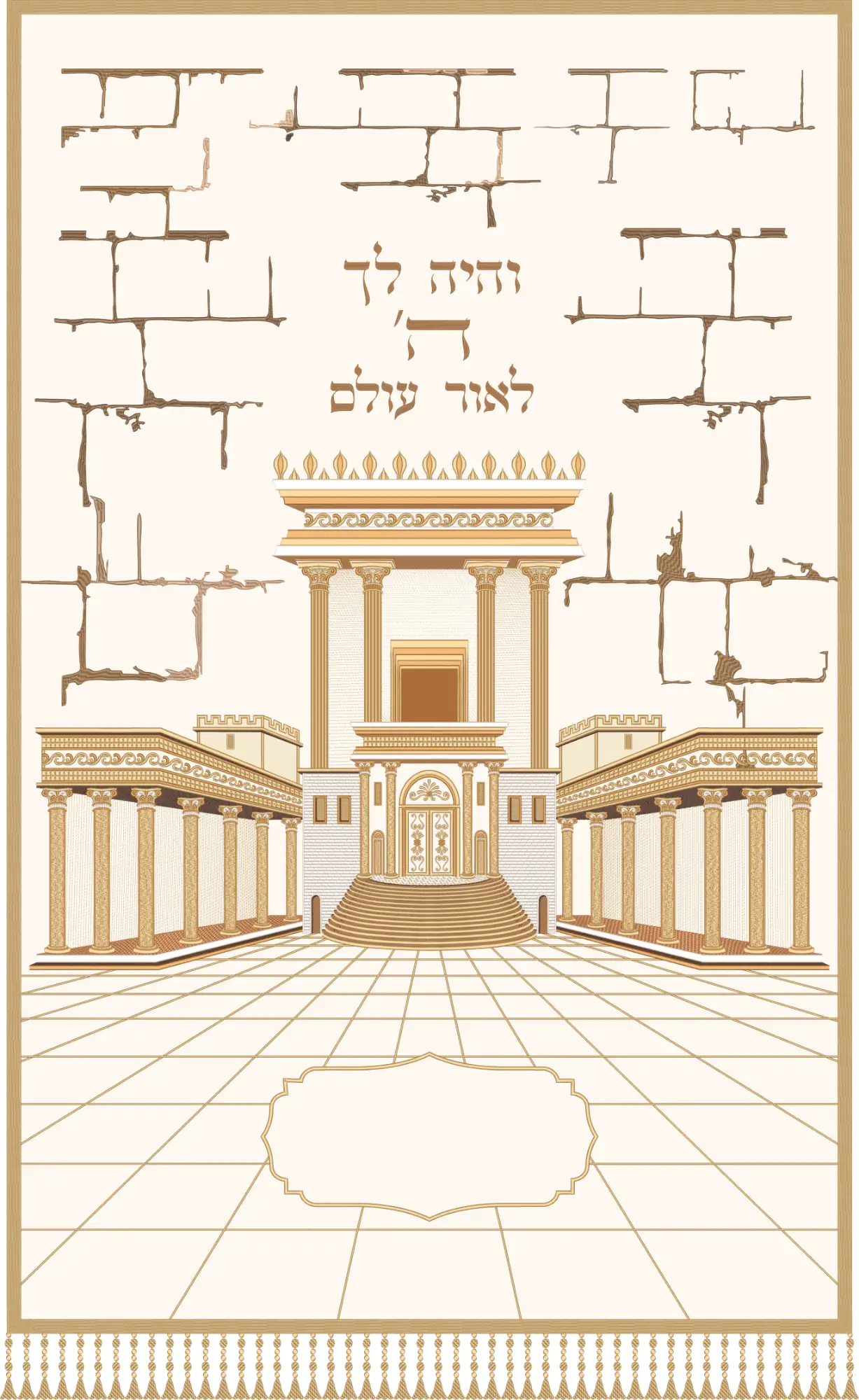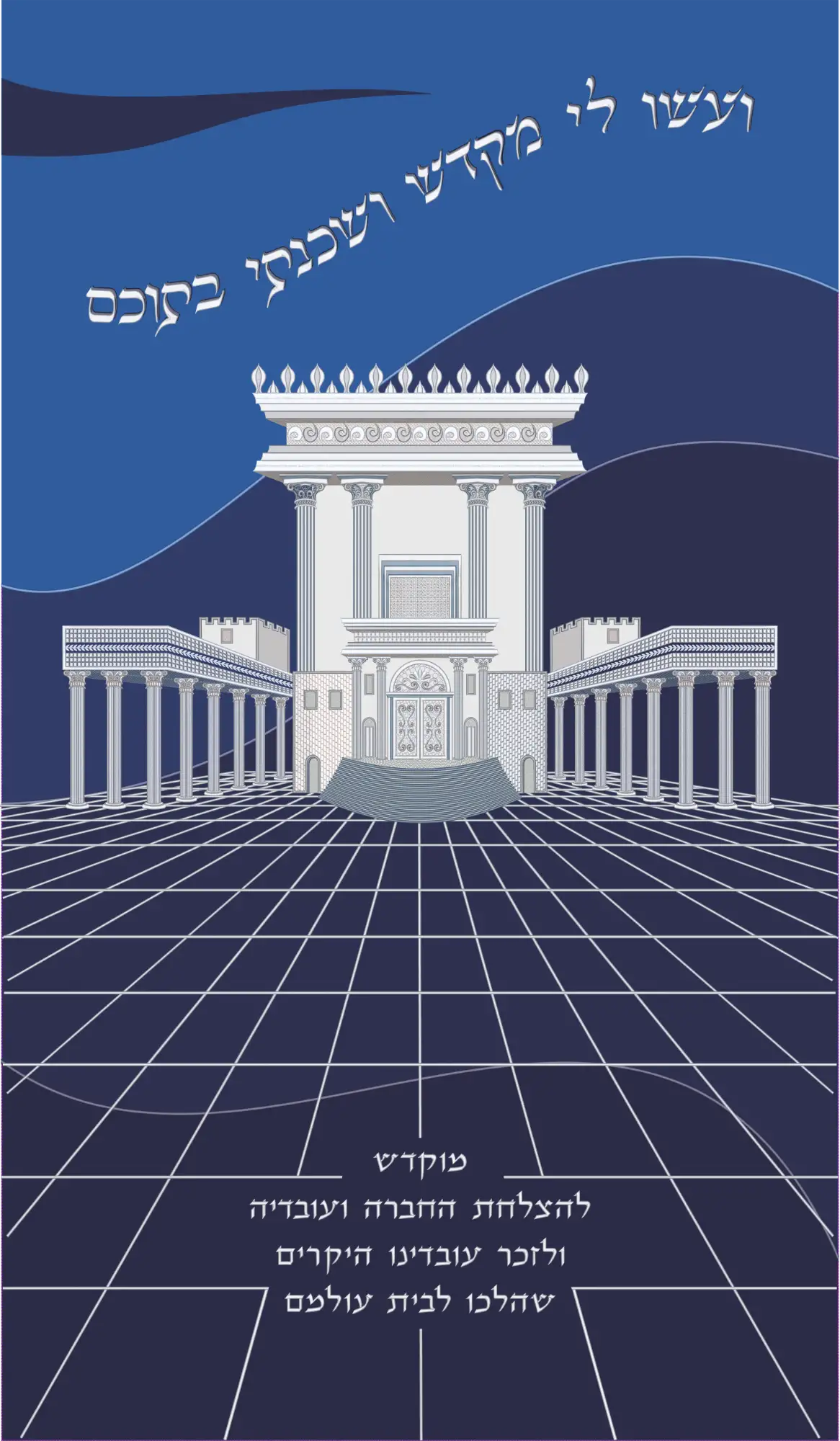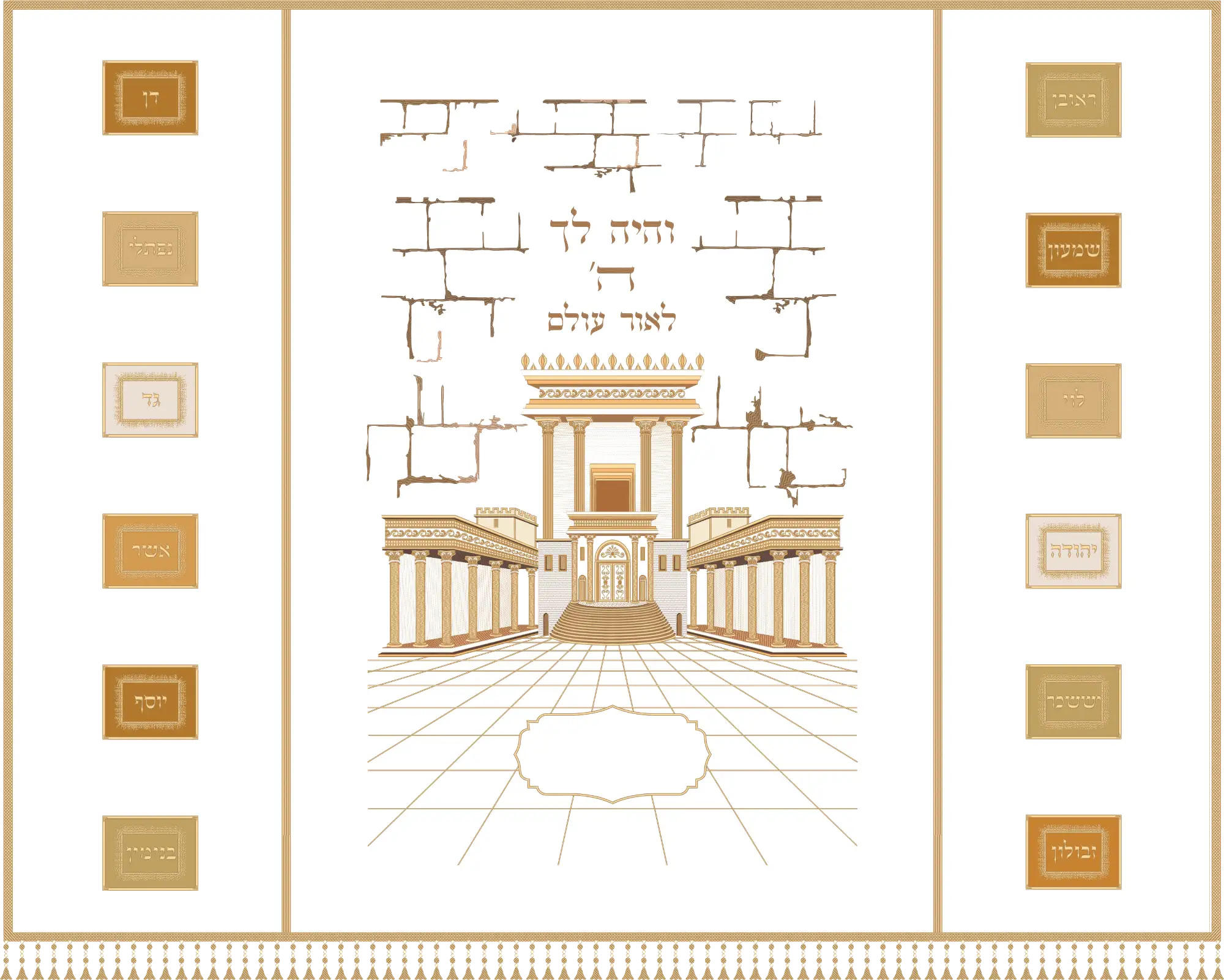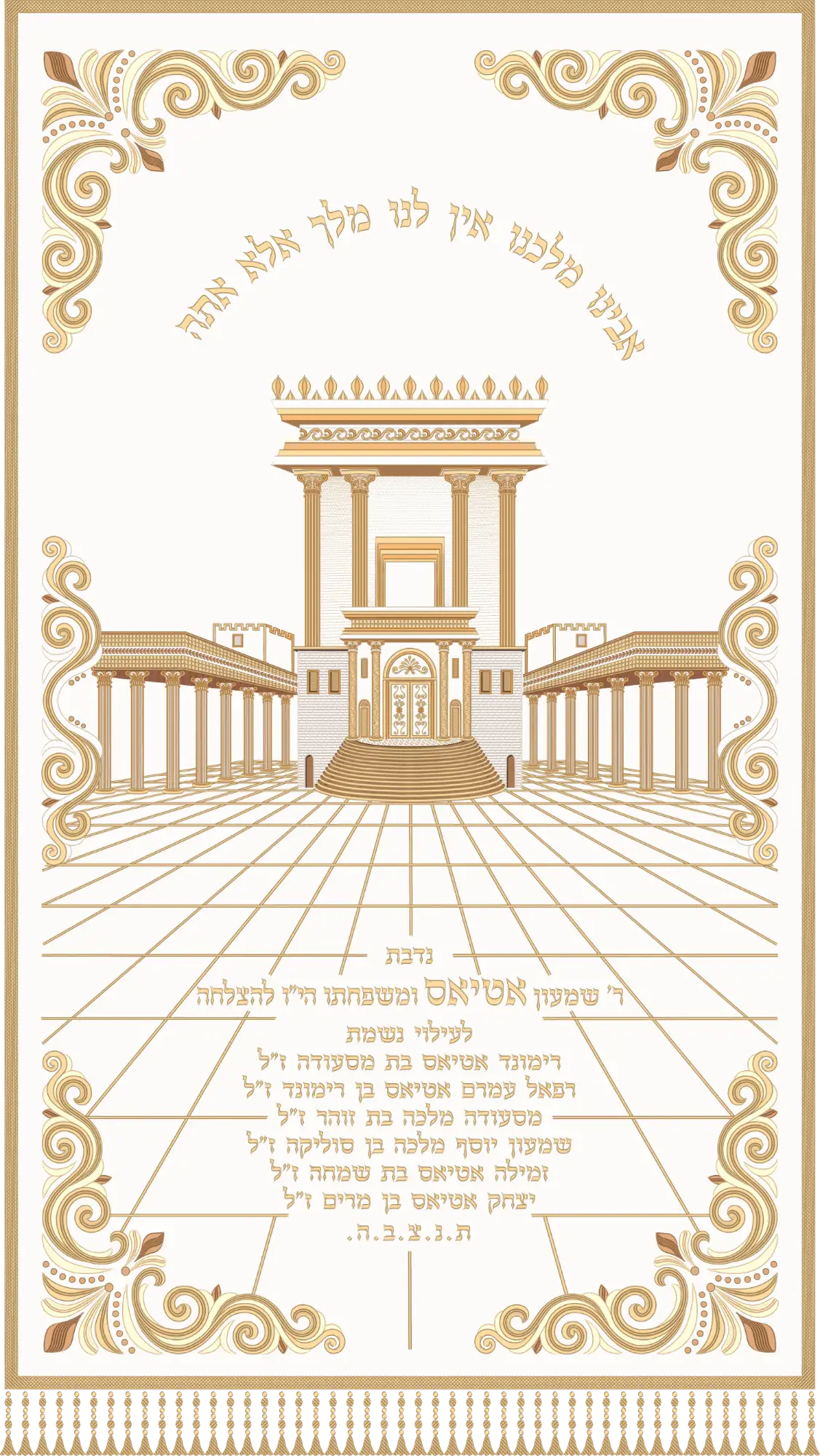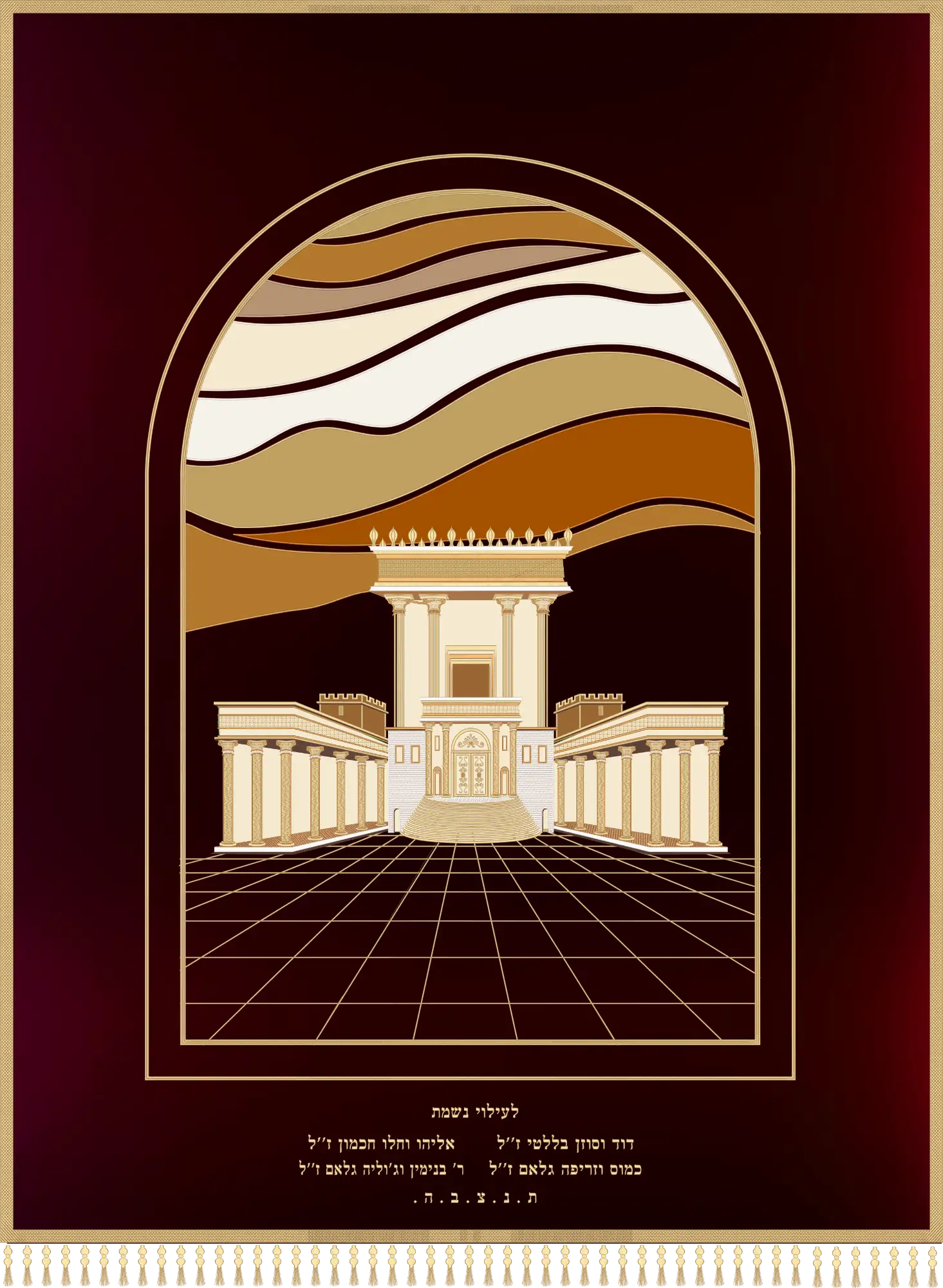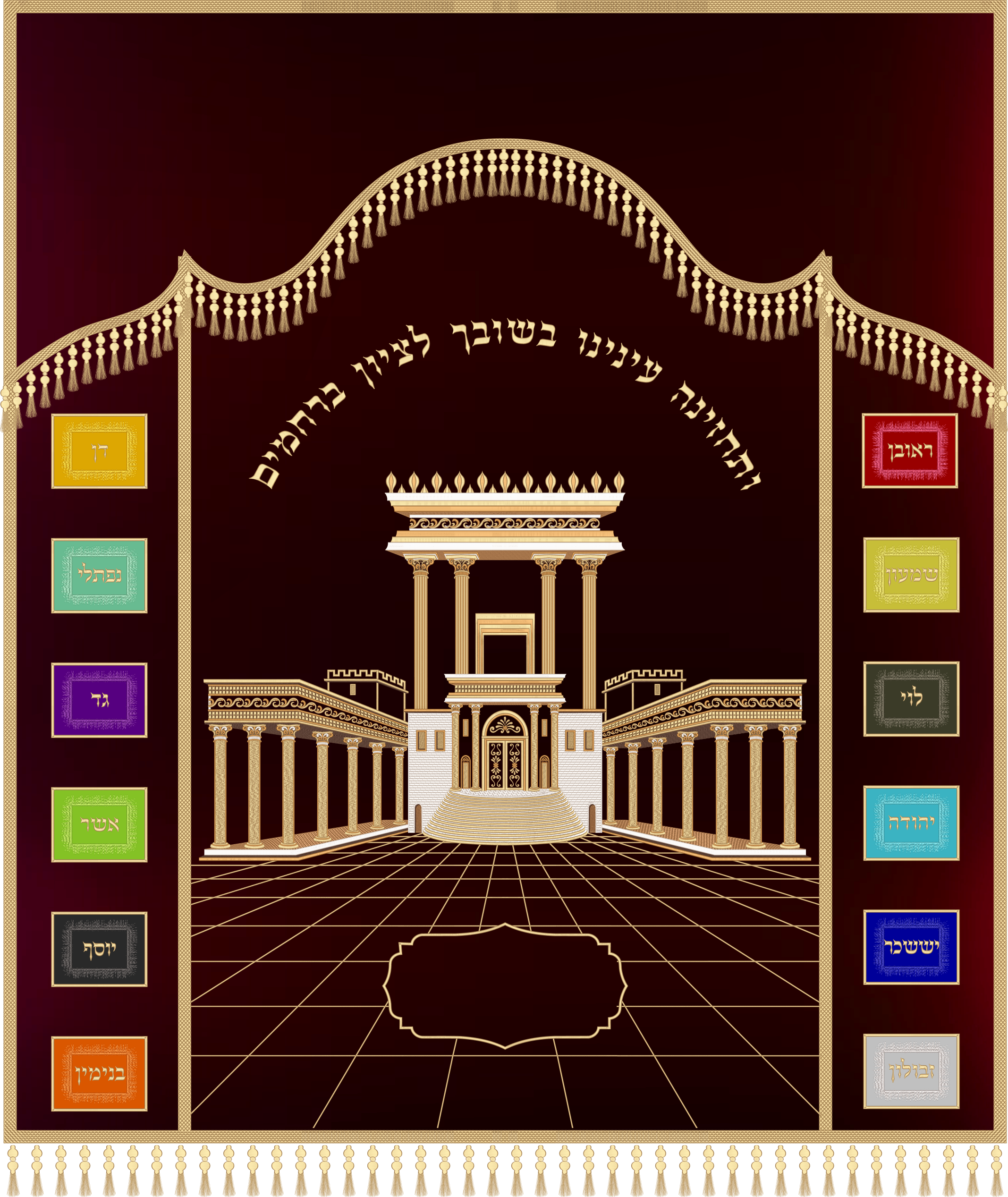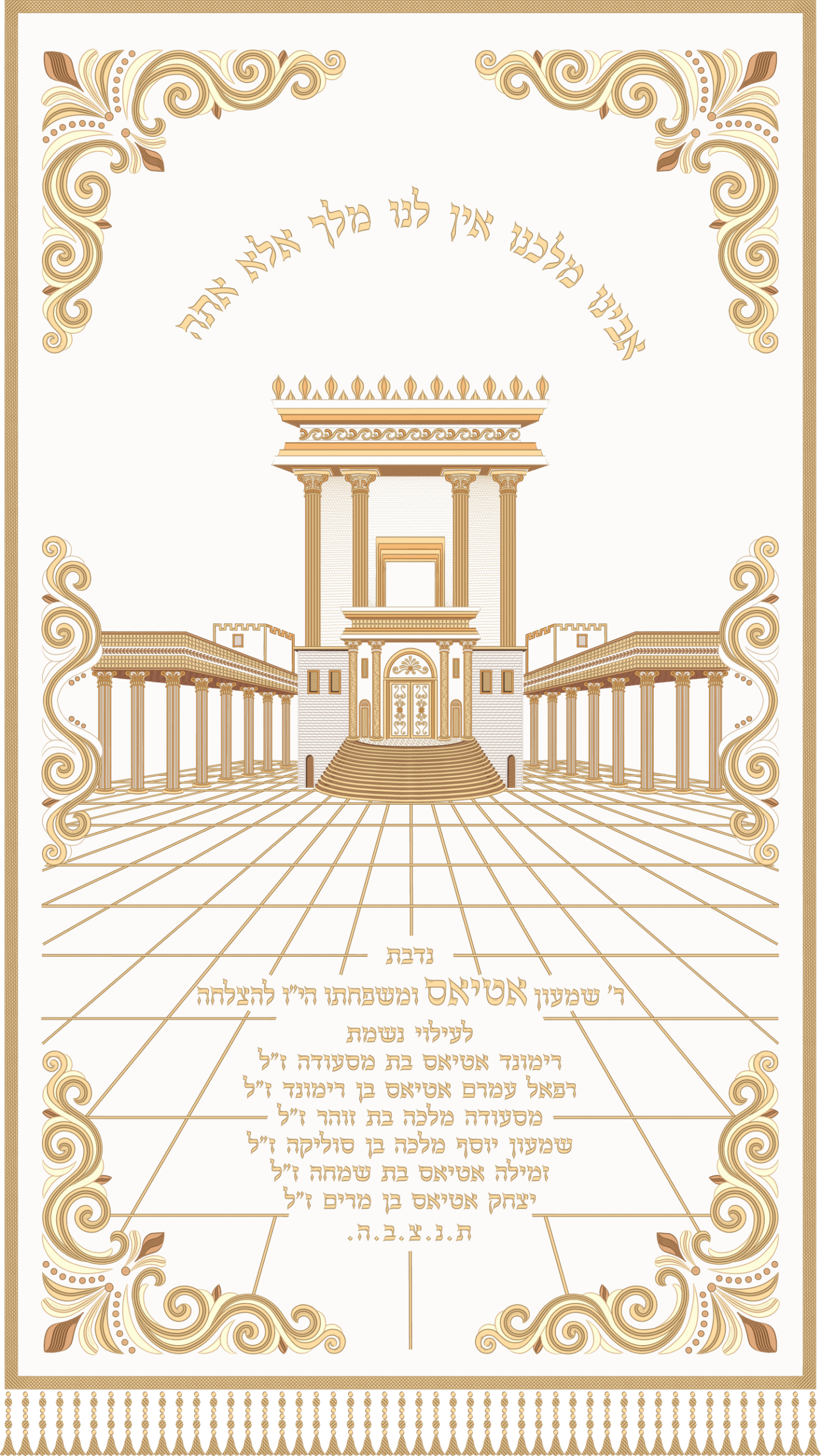

A Temple Parochet (פרוכת בית המקדש) is a hand-embroidered Torah ark curtain crafted to evoke the Beit HaMikdash, the Holy Temple that once stood in Jerusalem. Through imagery such as the Western Wall, the Temple façade, a sunset sky over the Temple Mount, or the twelve tribes of Israel, this style of parochet transforms the Aron Kodesh into a symbolic window onto Jerusalem. For congregations and families who want their ark to carry both artistic beauty and deep historical meaning, a Temple Parochet offers a daily, visual reminder of the Temple's central place in Jewish memory and hope.
The Curtain That Guarded the Holy of Holies
The idea of a richly worked curtain before a sacred space goes back to the Torah itself, which describes a woven parochet separating the Holy from the Holy of Holies in the Mishkan, made of blue, purple, and crimson wool combined with fine linen and worked by a skilled craftsman. That tradition continued through the First and Second Temples in Jerusalem, and it has carried forward into synagogue life ever since; you can read more about the parochet's historical role across Jewish tradition. A modern Temple Parochet does not attempt to be a museum reconstruction. Instead, it draws on that legacy to create something new: a curtain that speaks to the past while hanging proudly, and meaningfully, in a synagogue today.
Popular Design Themes for a Modern פרוכת בית המקדש
Every embroidery house interprets the Temple theme a little differently, but a handful of motifs recur again and again because they carry strong visual and emotional weight:
- The Western Wall backdrop – the stones of the Kotel rendered in fine embroidered detail, often set against a golden sky.
- Sunset over the Temple Mount – warm, radiant colors that suggest both longing and hope, as seen in this Temple parochet set against a sunset backdrop.
- Jerusalem hills and mountains – a wider landscape view that situates the Temple within the geography of the Land of Israel.
- The Twelve Tribes – stones or emblems representing each tribe, connecting the Temple to the whole nation it served.
- Deluxe gold corners and framing – ornamental borders that add a sense of majesty appropriate to the subject.
For a fuller, more elaborate presentation, many congregations choose a luxury Temple parochet design, which combines several of these elements – architecture, color, and gold embroidery – into a single, unified curtain.
Why Synagogues and Families Choose a Temple Parochet
A parochet devoted to the Beit HaMikdash carries meaning well beyond decoration. In daily prayer, Jews turn toward Jerusalem and the site of the Temple; a curtain that visually echoes that place keeps the sanctuary oriented, in spirit, toward the same destination. Many congregations select this theme for a new ark curtain because it fits any season of the year, not only the Three Weeks or Tisha B'Av, since the hope for the Temple's rebuilding is part of everyday Jewish liturgy. Families also commission a Temple Parochet as a dedication in memory of a loved one, adding an embroidered inscription beneath the imagery. Because the design draws on something larger than any single congregation's history, it tends to feel at home in a wide range of communities.
The Art and Craft Behind Every Stitch
Bringing a Temple Parochet to life is a slow, layered process. Fine silk or velvet forms the base fabric, chosen for how it catches light and holds color. Architectural elements, like the stones of the Wall or the outline of a gate, are built up stitch by stitch, often combined with metallic gold or silver thread to give depth and shimmer to domes, columns, or a rising sun. Because so much of the design's power lies in perspective and shading, an experienced embroiderer plans the composition carefully before a single stitch is sewn, balancing symbolism with visual harmony so the finished curtain reads clearly even from the back of the sanctuary.
Frequently Asked Questions
What is a Temple Parochet used for?
It hangs in front of, or inside, the Aron Kodesh as the curtain covering the Torah scrolls, while visually linking the synagogue to the memory of the Beit HaMikdash in Jerusalem.
Can a Temple Parochet be dedicated in someone's memory?
Yes – many families commission a Temple-themed parochet as a dedication, often adding an embroidered inscription with a name, date, or verse beneath the main design.
What materials are typically used to embroider a Temple Parochet?
Artisans generally work with silk or velvet as the base, layering fine hand embroidery and metallic gold or silver thread to capture architectural and landscape detail.
Conclusion: Bringing the Beit HaMikdash Into Your Sanctuary
Whatever combination of imagery a congregation chooses, a Temple Parochet (פרוכת בית המקדש) does something simple and powerful: it keeps the memory and hope of Jerusalem's Holy Temple in constant view, right at the heart of the synagogue. Hung before the ark week after week, it turns an ordinary moment of prayer into a quiet renewal of that ancient connection – one stitch, and one generation, at a time.